英语的一个 speech,选择的 Anime 作为话题。附上了 ppt 和稿子,都是自己写的,难免有错漏也没有那么严谨,但也放上来作为记录。
The topic I want to explore today is anime. Perhaps we often encounter elements of anime in our daily lives, and we frequently hear terms like "anime," "two-dimensional world," and "ACG." However, we may not fully understand their specific meanings, and online explanations can be quite varied. Today, I’d like to share my personal understanding and perspective on anime.
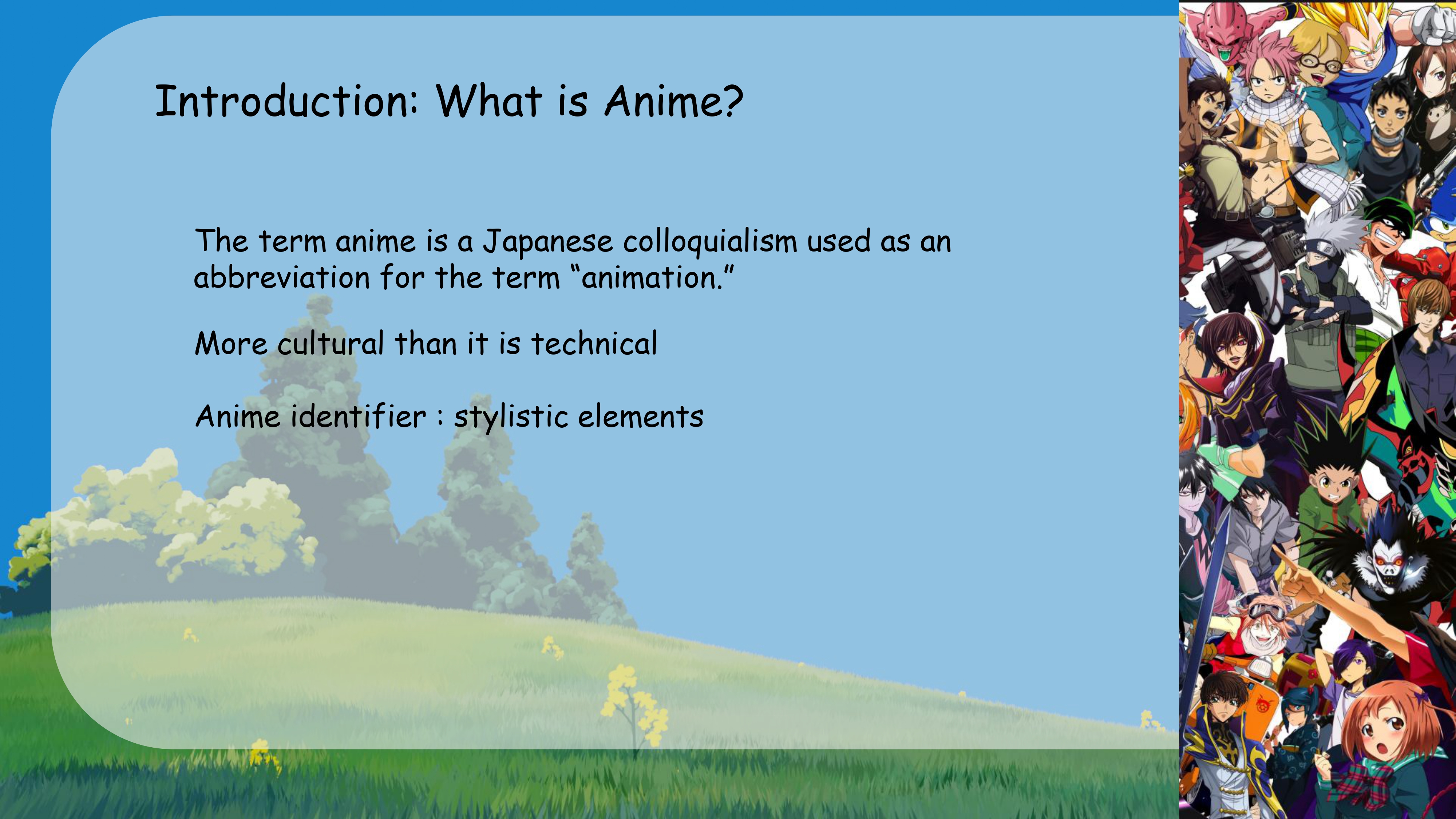
First of all, what is anime?
The word "anime" is a Japanese colloquial term that shortens the English word "animation." It generally refers to Japanese animation, setting it apart from animated works from other parts of the world. The difference between anime and Western cartoons is more cultural than technical, with unique artistic styles serving as key identifiers of anime—a tradition that dates back over 100 years.
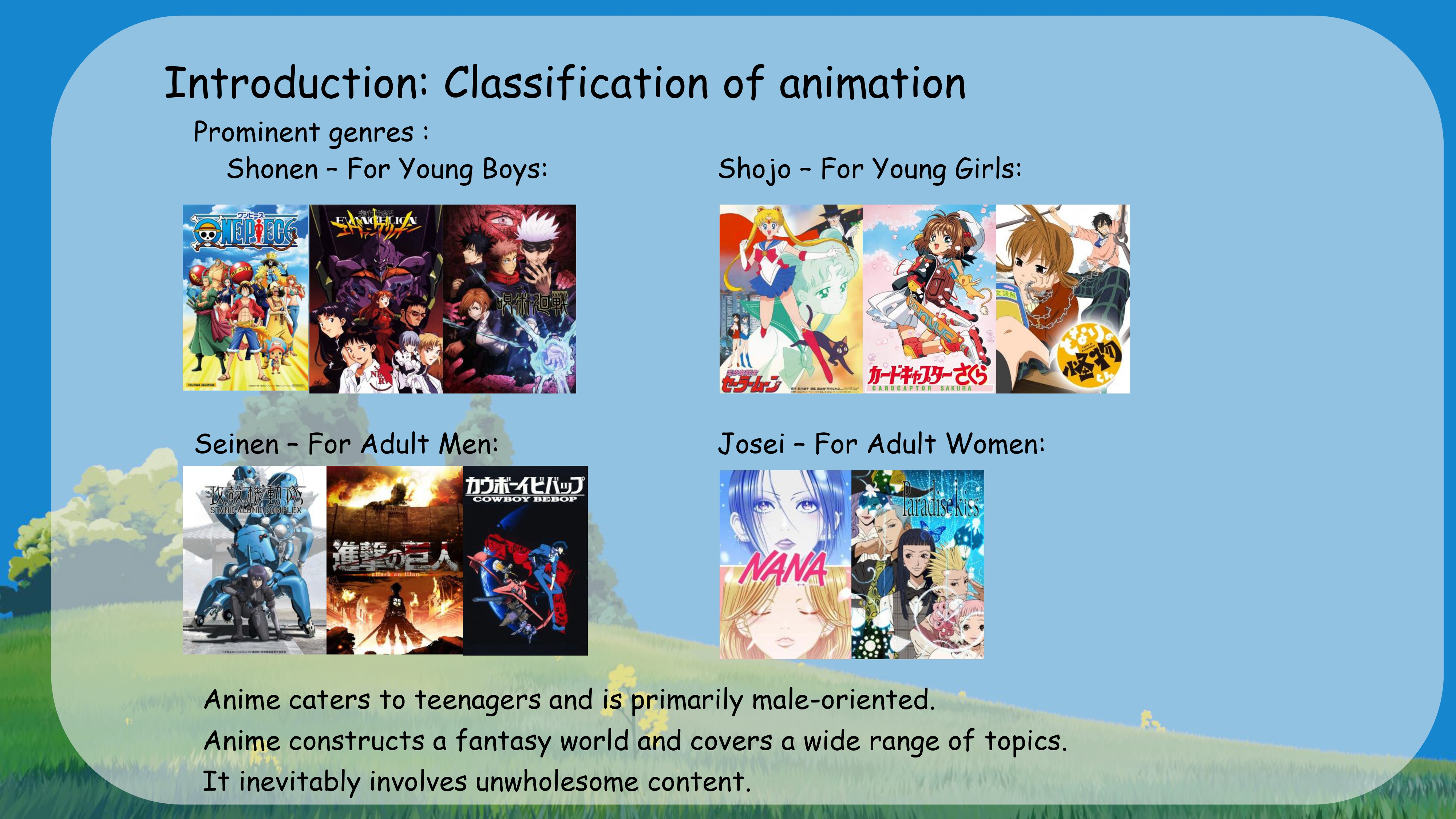
Anime can be categorized by target age and thematic depth:
...From this, we can see that anime often targets teenagers, with a significant portion aimed at male audiences. It frequently constructs fantasy worlds and covers a wide range of themes. However, it sometimes includes content that may be considered inappropriate.
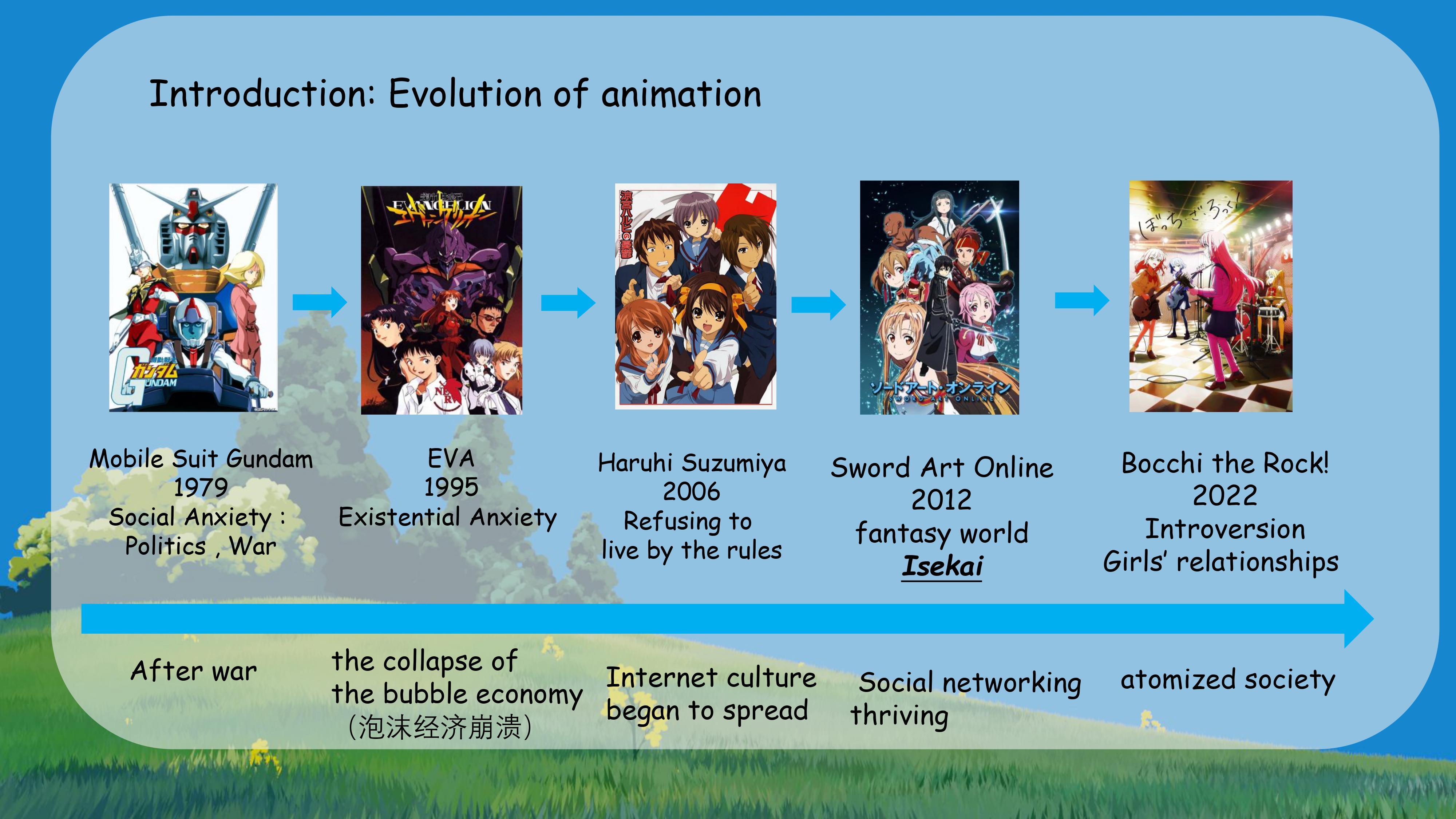
In terms of specific genres, I’ve selected a few representative works that reflect changes over time. For example:
- Gundam: This series explores post-war societal anxieties, such as war, politics, and the relationship between individuals and collectives.
- Neon Genesis Evangelion: Created after the collapse of Japan’s bubble economy, it delves into existential anxiety—questions like "What is the meaning of my existence?" and "How should I relate to others?"
- The Melancholy of Haruhi Suzumiya: This work represents the school-life genre and reflects the restlessness of younger generations who reject a conventional, rule-bound life.
- Sword Art Online: Symbolizing escapism in the age of the internet, it expresses a desire to restart life in a virtual world and partly represents the "isekai" (another world) genre.
- Bocchi the Rock!: As a pioneer of the "girls forming a band" genre, it portrays the introverted and socially anxious nature of otaku culture while also reflecting a fondness for light-hearted yuri themes.
Throughout its history, anime has mirrored the characteristics of its time. It is a vibrant medium of creativity that constructs imaginary worlds, offering us a form of emotional solace in some way.
Finding Ourselves in Characters, Replacing Reality with a Virtual World
Whenever I mention that I enjoy anime, almost all of my friends subtly imply that it’s not a good thing. They seem confused and disappointed, as if a mother had caught her child smoking in their room—as though watching anime is somewhat linked to abnormal behavior.
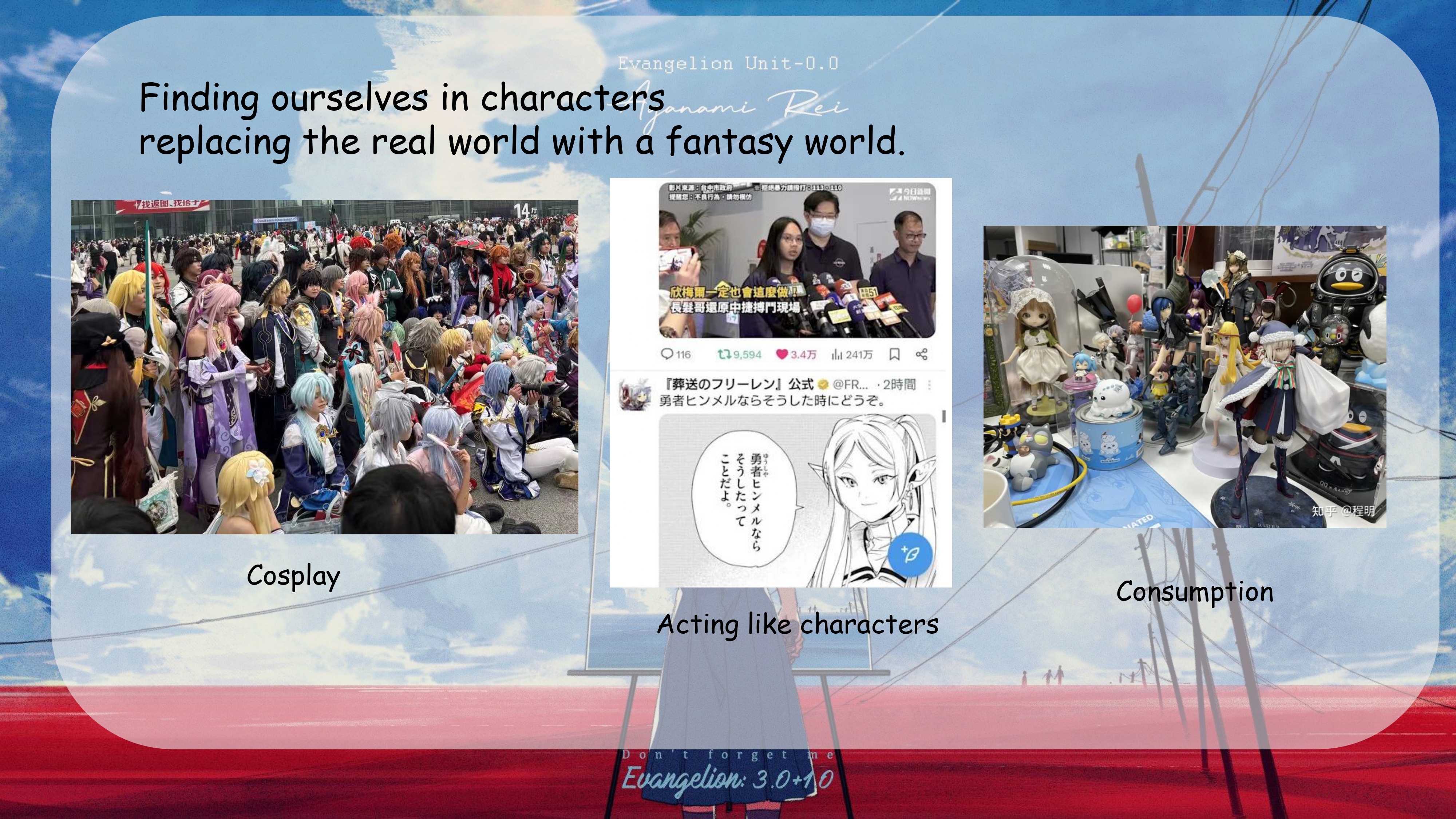
Take cosplay, for example. By dressing up as fictional characters, we spiritually seek acceptance and identity by imitating their actions and values. There was a young person in Taiwan who performed a brave act because they believed the protagonist in an anime would have done the same. We spend hundreds or even thousands money on merchandise of virtual characters, much like how we maintain relationships in real life. We watch characters in stories overcome great obstacles and find their "One Piece," yet in reality, a common cold can ruin an entire day.
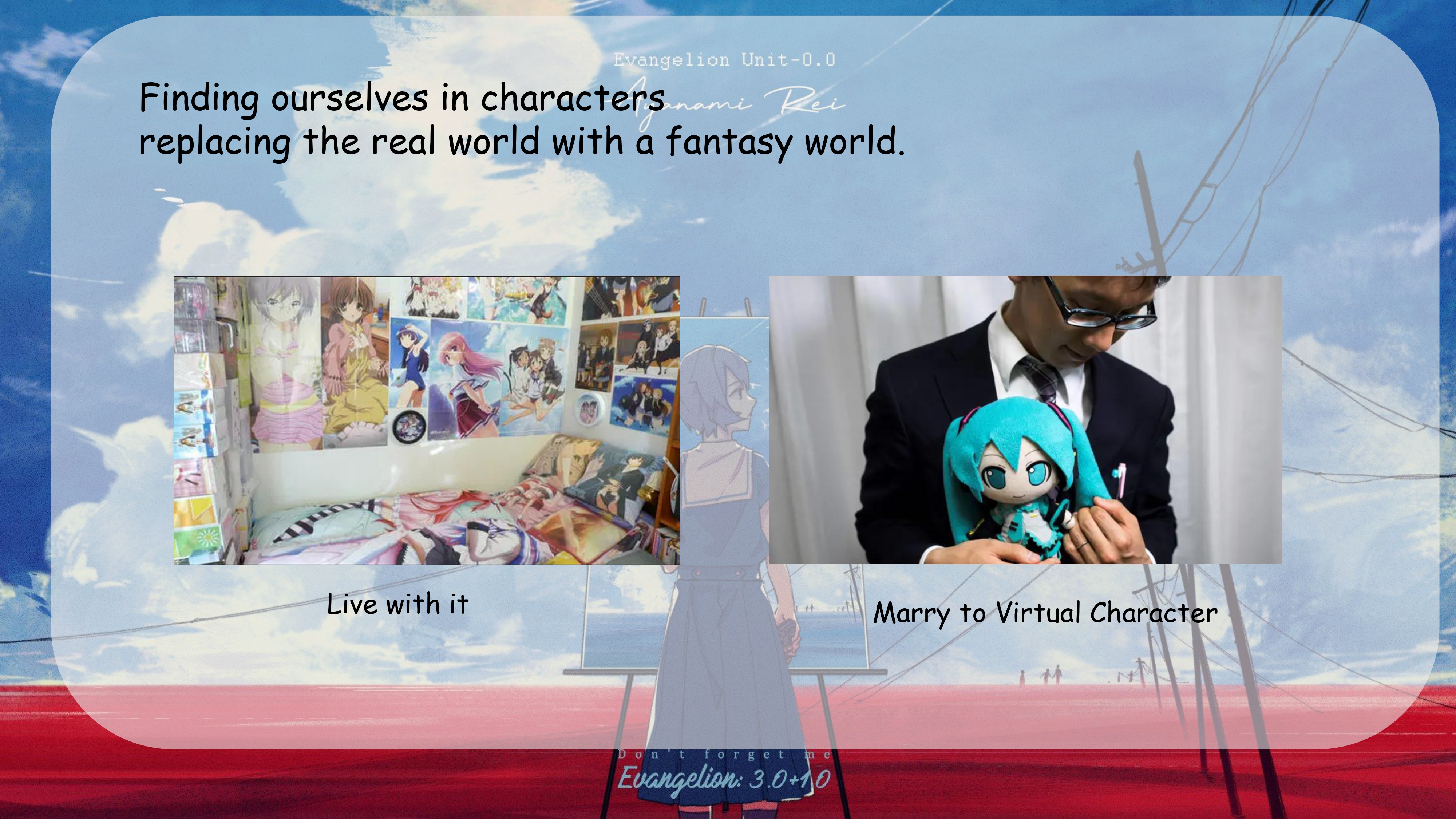
When the real world becomes too harsh, frustrating, or difficult to understand, young people often retreat into a fantasy world. To some extent, this is healthy—a defense mechanism that offers a temporary escape from overwhelming stress. However, deep immersion can lead to blending virtual life with reality. For example, we may prefer to stay in a fictional world and attempt to solve real-life problems solely through the lens of that world.
So, what do I think about anime?
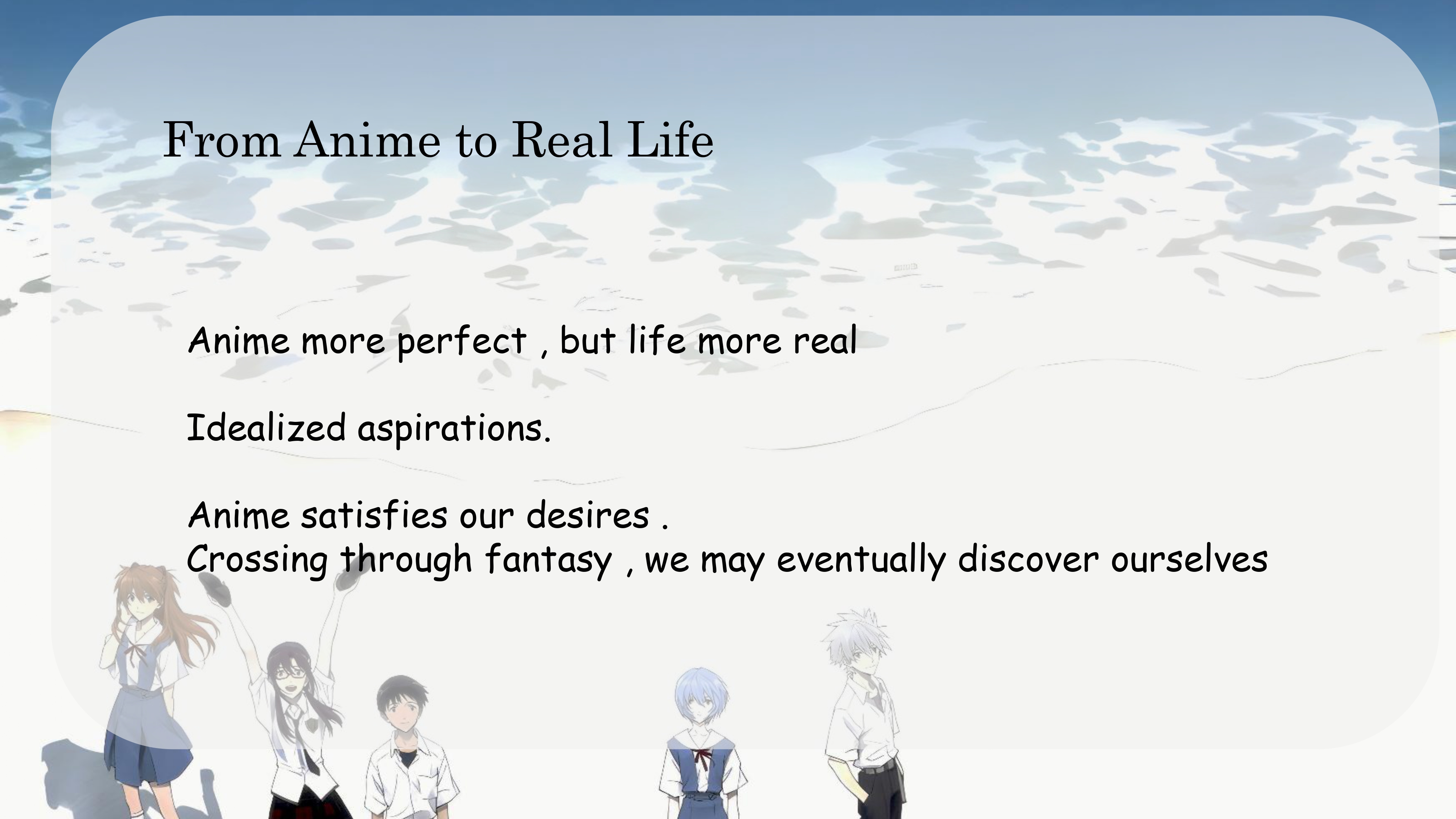
The real world may never be as perfect as the worlds depicted in anime, but anime can never be as real as the world we live in.
That said, anime can teach us valuable lessons and provide us with idealized aspirations. My college roommate once told me that after watching an anime, he deeply regretted having spent high school dullly studying without ever truly experiencing youth. Sometimes, I too wonder if I could have lived a more interesting life.
Perhaps anime simply satisfies our desires. What we need to do is not lose ourselves in it but face our desires head-on. As we encounter various fictional and real individuals, navigating through both reality and fantasy, we may eventually discover the kind of person we truly want to become.